Pages

Monday, December 12, 2011

Advent calendar #12: All of astronomy

In 1904, Max Born, a German born physicist who would win the Nobel prize in 1954, went to Göttingen to study mathematics and physics. He soon made friends with Professor Karl Schwarzschild, who taught astronomy, and at that time was not much older than his students. Schwarzschild's name might be familiar to you from the Schwarzschild-metric - the first known exact solution to Einstein's field equations that he would derive about a decade later.

In their book "Der Luxus des Gewissens" (The Luxury of Conscience) by Max Born and his wife Hedwig, Born recalls that he used to play tennis with Schwarzschild. Max Born (who was called "Maxel" by his friends) liked Schwarzschild's astronomy class, but did not feel very inspired by the lectures on geometry, held by the great mathematician Felix Klein, namegiver of the Klein bottle:
"Die geometrischen Vorlesungen... waren aber nicht nach meinem Geschmack, und ich besuchte sie nicht sehr regelmäßig... Mein Reinfall im müdlichen Examen, das in nur sechs Monaten bevorstand, schien unvermeidlich."

"The lectures in geometry... were not to my taste and I did not attend them on a regular basis. That I would flop at the oral exam, to which there were only six months to go, seemed unavoidable."

Maxel asked his friend Schwarzschild for advice. Schwarzschild suggested to instead take the exam in astronomy:
"[E]r sagte, ein halbes Jahr sei reichlich Zeit, die ganze Astronomie zu lernen."

"He said, half a year is more than enough time to learn all of astronomy."

Max passed the oral exam in astronomy, even though he answered the question "What do you do when you see a falling star?" with "I make a wish!" and only after Schwarzschild's further inquiry remembered to add "I note down the time and location, the direction and the length of the visible trace."

Sunday, December 11, 2011

Advent calendar #11: Prescient Einstein

From Bertram Kostant (Professor Emeritus of Mathematics at MIT) via Garrett Lisi @ Physics Forums comes the following anecdote:

"I was a visiting member of Princeton's Institute for Advanced Study in 1955. It was a Good Friday in April and Einstein was looking for the Institute bus to take him back home to 112 Mercer Street. Being Good Friday, the driver was on holiday amd I offered to drive him home. We had a wonderful conversation and at one point he asked me what I was working on. I told him Lie groups. He then remarked, wagging his finger, that that will be very important. Actually, I was quite surprised that he knew who Lie was. About a week later Einstein was dead."

Saturday, December 10, 2011

Advent calendar #10: It sounds Greek to me!

Of course we cannot allow Richard Feynman to be missing when we tell physics anecdotes. He told his anecdotes well himself, and they have been captured by Ralph Leighton in the book "Surely You're Joking, Mr. Feynman!" One of my favorites is this story:

I don't know why, but I'm always very careless, when I go on a trip, about the address or telephone number or anything of the people who invited me. I figure I'll be met, or somebody else will know where we're going; it'll get straightened out somehow.

One time, in 1957, I went to a gravity conference at the University of North Carolina. I was supposed to be an expert in a different field who looks at gravity. I landed at the airport a day late for the conference (I couldn't make it the first day), and I went out to where the taxis were. I said to the dispatcher, "I'd like to go to the University of North Carolina."

"Which do you mean," he said, "the State University of North Carolina at Raleigh, or the University of North Carolina at Chapel Hill?"

Needless to say, I hadn't the slightest idea. "Where are they?" I asked, figuring that one must be near the other.

"One's north of here, and the other is south of here, about the same distance."

I had nothing with me that showed which one it was, and there was nobody else going to the conference a day late like I was.

That gave me an idea. "Listen," I said to the dispatcher. "The main meeting began yesterday, so there were a whole lot of guys going to the meeting who must have come through here yesterday. Let me describe them to you: They would have their heads kind of in the air, and they would be talking to each other, not paying attention to where they were going, saying things to each other, like 'Gmunu.Gmunu.'"

His face lit up. "Ah, yes," he said. "You mean Chapel Hill!" He called the next taxi waiting in line. "Take this man to the university at Chapel Hill."

"Thank you," I said, and I went to the conference.

Friday, December 09, 2011

Advent calender #9: Prof. Jolly's advice

When Max Planck had finished high school in 1874, he was unsure which career path to chose. He had many different talents and interests, and pondered becoming a concert pianist, or study classical philology, or maybe mathematics and physics. Planck's father, a professor of law, mediated an appointment with his colleague, physicist Philipp von Jolly, for Max to get some advice. Prof. Jolly was a bit gloomy about the prospects of physics, and didn't want to raise false hopes in the young man. As Max Planck remembered,

Als ich meine physikalischen Studien begann und bei meinem ehrwürdigen Lehrer Philipp von Jolly wegen der Bedingungen und Aussichten meines Studiums mir Rat erholte, schilderte mir dieser die Physik als eine hochentwickelte, nahezu voll ausgereifte Wissenschaft, die nunmehr, nachdem ihr durch die Entdeckung des Prinzips der Erhaltung der Energie gewissermassen die Krone aufgesetzt sei, wohl bald ihre endgültige stabile Form angenommen haben würde. Wohl gäbe es vielleicht in einem oder dem anderen Winkel noch ein Stäubchen oder ein Bläschen zu prüfen und einzuordnen, aber das System als Ganzes stehe ziemlich gesichert da, und die theoretische Physik nähere sich merklich demjenigen Grade der Vollendung, wie ihn etwa die Geometrie schon seit Jahrhunderten besitze. (Max Planck, Wege zur physikalischen Erkenntnis, S. Hirzel, 1933, p. 128)

Philipp von Jolly described physics as a highly developed, almost fully matured science, which was about to reach a final form, now that the principle of conservation of energy had been discovered. He thought that there may be a speck or a vesicle left to be studied and classified in one or the other angle of the field, but that as a whole, the system had a fairly safe standing, and that theoretical physics was approaching the same degree of perfection reached by geometry already centuries ago.

Max Planck did not let himself be dissuaded from studying physics by this assessment, and the rest is history.

Thursday, December 08, 2011

Advent calendar #8: Einstein's old envelopes

When Herr Professor Doktor Einstein and his wife visited Mr and Mrs Hubble at Mt Wilson, at one stage the two ladies were left alone to swap confidences. Mrs Hubble pointed at the great telescope and explained that her husband used it “to study the nature of the universe” whereupon Frau Einstein retorted that “my husband does that on the back of an old envelope!”


Submitted by Cormac O' Raifeartaigh. This anecdote is mentioned for example in “The Day We Found the Universe” by Marcia Bartusiak.

Wednesday, December 07, 2011

Advent calendar #7: Bullshit with equations

“In [high energy] quantum physics, to observe something, you have to create it. Now this sounds scarily close to bullshit. But if it is bullshit, then at least it's bullshit with equations.”

~Frank Wilczek, public lecture at Perimeter Institute


(Recycled from November 2008)

Tuesday, December 06, 2011

Advent calendar #6: The dissolved Nobel Prizes


This is the most wondrous story in our advent calendar.

The two German physicists Max von Laue and James Franck won the Nobel Prize in 1914 and 1925 respectively. When the Nazis grew strong in Germany von Laue and Franck sent their medals, made of 23-karat gold, to Niels Bohr in Copenhagen. During these troublesome times many people were hiding or burying their family jewelry or anything of timeless value that they wanted to keep out of the Gestapo's hands, though it was illegal to send valuables out of country.

Unfortunately, by 1940 the Nazis made it to Copenhagen. Bohr was now in possession of two large gold pieces that carried von Laue's and Franck's names and clearly left Germany unapproved. Bohr had to get rid of the Nobel medals, and quickly so. It was Georgy de Hevesy, a colleague and friend from the department of chemistry, who came up with a ingeneous solution, quite literally: he would dissolve the medals.

Now gold is a precious metal and what makes it so precious is that it is slow to react with anything. It takes a mixture of acids known as aqua regia and time to dissolve gold, but at the end of a seemingly endless afternoon the medals were gone and left was a glass with a bright orange solution that didn't catch the interest of the Nazis.

But that wasn't the end of the story. After the war, de Hevesy returned to his lab and found the orange solution undisturbed in his shelf. He precipitated out the gold and sent it back to the Nobel Foundation in Stockholm. They recast the medals and gave them back to von Laue and Franck.

De Hevesy won the Nobel price for chemistry in 1943.

This story can be found in many books. It was recently told in some more details at NPR blogs: Dissolve my Nobel Prize! Fast!.

Monday, December 05, 2011

Advent calendar #5: Share the love

In 1933, Erwin Schrödinger moved to Oxford. The physicist Arthur March, best known for his (failed) attempt to give physical meaning to a Lorentz-invariant minimal length scale, was not only Schrödinger's colleague but also a close friend. Due to Schrödinger's initiative, March too got a position in Oxford. Summer 1933, on a vacation in Tyrol, Schrödinger went on a bike excursion with Arthur March's wife Hilde. Nine months later Hilde gave birth to Schrödinger's daughter. Arthur March did not seem to mind much, but Schrödinger's wife went on to have an affair with the mathematician Hermann Weyl, while Weyl's wife in return found comfort with the physicist Paul Scherrer.

This and other details of Schrödinger's illustrious life can be found in Walter Moore's biography Schrödinger: Life and Thought.

Sunday, December 04, 2011

Advent calendar #4: Einstein's haircut

In Stefan's bookshelf I found a little book "Einstein privat" by Friedrich Herneck who, on the book cover, is described as "one of today's leading Einstein researchers." Herneck interviewed Einstein's former household aid, Herta W., about everything from Einstein's smoking habits, over nicknames used in the family to how often Einstein fed the goldfish. Herta W. had the following to say about Einstein's haircut which, next to going sockless, has become trademark of the ingenious theoretical physicist:
"Wenn seine Haare zu lang waren, wenn es gar zu schlimm geworden war, dann hat [seine Frau Elsa] ihm das Haar mit der Schere abgeschnitten. Das hat er sich dann auch machen lassen. Da Frau Professor aber sehr kurzsichtig war und beim Haarschneiden ihre Lorgnette, ihre Stielbrille, nicht ständig benutzen konnte... Aber Herr Professor war eben nicht zu bewegen, zu einem Berufsfrisör zu gehen."

"When his hair grew too long, when it got really intolerable, then [his wife Elsa] cut his hair off with a scissor. He let her do that. But since Frau Professor was very shortsighted and, during cutting, could not always use her Lorgnette... But Herr Professor could not be bothered to see a professional barber."

"Frau Professor" is (here) the form of address for the professor's wife and a lorgnette are old-fahioned glasses that have to be held on a handle in front of one's eyes. Later in the interview there's more talk about Frau Professor's shortsightedness and it seems it was indeed serious. She was however too vain to permanently wear thick glasses.

Saturday, December 03, 2011

Interna

Lara and Gloria are now 11 months old. They can both stand, on wobbly knees, though most of the time they insist on holding onto the furniture. Lara has half of a first tooth and a second in the making, and Gloria's first tooth is just about visible. I of course have dutifully brushed Lara's halftooth with pink toothpaste, which she seems to find very amusing. The babies have both suffered through their first cold, luckily a mild version, and have learned to nibble on bread and cookies.

 It is interesting to see how different the girls are, even though they share not only the same parents, but also a room, clothes and toys. Lara is now a few centimeters taller and also an estimated two pounds heavier than Gloria. (We'll know more precisely at their next doctor's visit, which is in 2 weeks.) When Gloria falls, she inevitably starts crying dramatically until you pick her up. When Lara falls, she might make some surprised sound, though not always, and just move on. She does however occasionally start crying just because her sister cries. Gloria sucks her thumb (the left one), day and night; Lara never does. Lara does however gnaw on the bedposts with her half tooth.

 Trying to change Lara's cloths has become a fight because she kicks, throws towels and cloths around, and tries to grab everything close enough. If you pull her away or turn her back around, she laughs and tries even harder. Gloria is one charmingly smiling baby on the changing table, as long as she has her rubber ducky to suck on. But try to take the ducky away...

I meanwhile am fighting once again with the paperwork. Not only are my Swedish parental benefits running out on Tuesday, but the Germans are refusing to pay Stefan's parental benefits. After a lot of calls and letters, it turned out that they seem to have misread one of the Swedish documents I sent them and thought the amount I got for 5 months was for one month, then concluded we're too rich to apply for benefits in Germany. Now they want more paperwork, that I have to rout to Sweden and back. For that and some other reasons I am somewhat stressed out in these darkest weeks of the year, so excuse the lack of originality on this blog. Finally, Lara sends her greetings:
 

Advent calendar #3: Details are missing

In 1958, Pauli and Heisenberg were working an a unified theory which is today still the holy grail of particle physicists. Heisenberg gave a talk about their recent results, appearing confident that they had found a unified theory, only technical details were missing. An eager journalist who sat in the audience spread the news about the "world-equation," very much to Pauli's dismay. In a 1958 letter to George Gamov, Pauli commented on Heisenberg's radio announcement: "This is to show the world that I can paint like Titian. Only technical details are missing," illustrated by an empty rectangle.


This alleged all-explaining world equation came about before Yang and Mill's contribution to physics became appreciated. Looking at the Lagrangian in question today, it doesn't seem to be gauge invariant and with a four-fermion coupling won't fare well in terms of renormalizability.

Pauli's letter can be found in the CERN archive.

Friday, December 02, 2011

Advent calendar #2: Pauli and the anomalous Zeeman effect

The Zeeman effect is the splitting of spectral lines in an external magnetic field, first observed by Pieter Zeeman in the late 19th century. The magnetic field removes a degeneracy between electron shells with different magnetic quantum number. By 1920 that was fairly well understood, unfortunately most of the observed atoms showed much more complicated spectra than expected. This became known as the "anomalous Zeeman effect" and caused the theoretical physicists of the time quite some headache. We know today that the additional splitting is due to the electron spin, but it was still a decade till Dirac would write down the equation for spin 1/2 particles that is now named after him. Recalling the time in 1946, Wolfgang Pauli wrote:

“A colleague who met me strolling rather aimlessly in the beautiful streets of Copenhagen said to me in a friendly manner, “You look very unhappy,” whereupon I answered fiercely, “How can one look happy when he is thinking about the anomalous Zeeman effect?””

Thursday, December 01, 2011

Call to readers: Send us your favorite physics anecdote!

Reminded by a recent comment, Stefan and I noticed that time has come to open the first door on the advent calendar. This year, we will have a daily anecdote from the lives and works of well-known physicists. These are all quotations or stories that many of you will be familiar with from your physics lectures, but I hope for the rest of our readers it will be a little daily entertainment one the way to the holidays. We also have a few anecdotes that while widely known I learned are actually fabricated.

Unfortunately, Stefan's and my brainstorming only brought up 19 items! So we need you to help us out: Send us your favorite physics anecdote or quotation (if possible with source), or we'll run out of stories a week before Christmas. To save an element of surprise for our readers, please do not post it in the comments here, but send an email to hossi[@]nordita.org (remove brackets), subject: physics anecdote. Don't be shy, I won't tell anybody you're reading blogs ;o)

We start today with the 1st anecdote. It's one of my favorites and, I guess, probably also among the best known ones. A journalist who goes under the name Roundy, interviews Paul Dirac. The interview appeared in the Wisconsin State Journal in April 1929 and its complete version can be found on this website.

"Professor," says I, "I notice you have quite a few letters in front of your last name. Do they stand for anything in particular?"

"No," says he.

"You mean I can write my own ticket?"

"Yes," says he.

"Will it be all right if I say that P.A.M. stands for Poincaré Aloysius Mussolini?"

"Yes," says he.

"Fine," says I, "We are getting along great! Now doctor will you give me in a few words the low-down on all your investigations?"

"No," says he.

"Good," says I. "Will it be all right if I put it this way --- `Professor Dirac solves all the problems of mathematical physics, but is unable to find a better way of figuring out Babe Ruth's batting average'?"

"Yes," says he.

"What do you like best in America?", says I.

"Potatoes," says he.

"Same here," says I. "What is your favorite sport?"

"Chinese chess," says he.

That knocked me cold! It was sure a new one on me! Then I went on: "Do you go to the movies?"

"Yes," says he.

"When?", says I.

"In 1920 --- perhaps also in 1930," says he.

"Do you like to read the Sunday comics?"

"Yes," says he, warming up a bit more than usual.

"This is the most important thing yet, doctor," says I. "It shows that me and you are more alike than I thought. And now I want to ask you something more: They tell me that you and Einstein are the only two real sure-enough high-brows and the only ones who can really understand each other. I wont ask you if this is straight stuff for I know you are too modest to admit it. But I want to know this --- Do you ever run across a fellow that even you can't understand?"

"Yes," says he.

"This well make a great reading for the boys down at the office," says I. "Do you mind releasing to me who he is?"

"Weyl," says he.

Tuesday, November 29, 2011

What is all the thinking good for?

The other day I had to write a text explaining the importance of theoretical high energy physics and quantum gravity for the future of mankind. In layman's terms and less than two paragraphs.

I volunteered to do this because my frontal lobe starts shriveling whenever I have to endure somebody working in this area trying to justify their existence by confidently explaining that spin foams will one day dramatically improve the iPhone or so.

Okay, I'm exaggerating. But as I wrote previously it saddens me considerably that knowledge for the sake of knowledge doesn't seem to count as progress anymore. It's not that I don't value technological progress, I just don't think that's all that can “benefit the future of mankind.” As much as I criticized Slouka's article “Dehumanized”, I agree with him that we should stand our ground rather than adapting to external pressure that asks for material short-term outcomes. I finally wrote the following.

“What are we made of?,” “Where do we come from?,” and “What are the laws of Nature that we conform to?” are fundamental questions about our existence that scientists have studied for thousands of years. The quest to answer these questions and to understand the place of mankind in the vastness of the cosmos has lead to a great many of technological improvements. Material prosperity is a, welcome and desired, result that better knowledge of the fundamental laws of Nature brings. But knowledge by itself has also an immaterial value that feeds our desire to understand the world which brought about planet Earth and conscious life on it.

In the last century we have made dramatic progress with our understanding of space, time and matter, but open problems in today's best theories tell us that our knowledge is incomplete. New observations that can guide our learning have moved to very high energies and large distances. It is subject of our research in the areas of high energy physics, quantum gravity, and cosmology to combine the requirements of mathematical consistency and compatibility with observation to learn about the earliest moments of the universe, the elementary constituents of matter, and the structure of space and time itself. Among the most exciting and unforeseen recent insights is the connection between this research and condensed matter physics that is one of the focus areas at Nordita.

Nordita's website btw has undergone a general overhaul and is now remarkably improved.

You can go and shatter my world view by telling me the actual reason you're working on quantum gravity is that you want to become a billionaire with a new and improved GPS that locates your car keys with a precision of a Planck length.

Sunday, November 27, 2011

New Template

As you can see, we have finally switched to the new blogger template. Feedback is welcome!

Wednesday, November 23, 2011

Book review: "Impossibility" by John D. Barrow

Impossibility: The Limits of Science and the Science of Limits
John D. Barrow
Oxford University Press (1999)

In his book "Impossibility: The Limits of Science and the Science of Limits" John Barrow has carried together everything that sheds light on the tricky question what is possible, practically as well as conceptually. It is an extensive answer to the question of FQXi's 2009 essay contest "What is ultimately possible in physics?" but takes into account more than just physics. Barrow also covers economical, biological and, most importantly, mathematical aspects of the question what we can and can't do, what we can and can't know.

The book discusses paradoxa, timetravel, computabily, complexity and the multiverse, though Barrow never uses the word multiverse. The book was written somewhat more than a decade ago, but the summary of eternal inflation and bubble universes, varying constants and the question if it is still science to speculate about something that's unobservable is timely, and Lee Smolin's cosmological natural selection also makes an appearance. Barrow does mention some of his own work (on varying constants and universes with non-trivial topologies) but only in a paragraph or two.

Barrow briefly introduces most of the concepts he needs, but I suspect if you don't already have a rough idea what cosmology and quantum mechanics is about, some sections will not make a lot of sense. He mentions for example the many worlds interpretation in the passing without ever explaining what it is, and has the possibly shortest explanation of inflation and the expanding universe I've ever seen. But if you've read one or the other book that covers these topics you might (as I) be relieved Barrow keeps it short.

The presentation is very non-judgmental. Barrow essentially goes through all aspects of the issue and reports who has contributed what to the discussion, without imposing an opinion on the reader. He also gives an interesting historical perspective on how our view on these questions has changed esp. with Gödel's contributions. However, the writing reads more like a review than a book in that it lacks a narrative, and Barrow also doesn't offer own conclusions, he just summarizes others' arguments. I don't mind so very much about the lack of narrative since I have grown a little tired by the current pop sci fashion to make up a story around the facts so it sells better, but I'd have expected some original thoughts here or there. It is also unfortunate that the book is very superficial on some topics, for example time travel and free will, and if you know a little about that already you won't hear anything new. On the other hand, if you just want a flavor and some references for further reading, Barrow does a good job. I ceartainly learned about some aspects of the possible and impossible that I hadn't thought about before.

Barrow's book is well structured with a summary at the end of each chapter and a final summary in the last chapter. This is very convenient if you put the book down and only pick it up again a few months later and need a reminder what you've already read.

I've been reading for a while on this book. Since 2008 in fact, if I believe the receipt. The reason it took me so long has very little to do with the actual content of the book which, now that I managed to finish it I like very much, and more mundanely with the representation of that content. The book is printed in tiny and in addition the print is crappy, so I get tired just by opening it and looking at a page. It has a few illustrations that are very helpful and to the point, but not particularly inspired. There are also a few photos. As you can guess however, Hubble Deep Field in a crappy black and white print on some square inch isn't too compelling, and it's difficult to see the Château in Magritte's Château de Pyrénées.

Taken together, you may enjoy this book if you are interested in a summary of aspects of the possible and impossible, but you would be disappointed if you're looking for an in-depth treatment of any particular aspect. The book is well written, though not very inspired, and the scientific explanations are well referenced and, for all I can tell, flawless. I'd give four out of five stars if I had stars to give.

Saturday, November 19, 2011

Google Scholar Citations

Google Scholar has a new feature, Google Scholar Citations, that allows you to generate a profile page with your papers. It also lists citations and calculates the infamous h-index. Have a look at my profile here to see if it's an interesting feature for you.

Is it?

To set up a profile page, you first need a Google account. If you already have one, it takes like 2 minutes or so. If you set up your page and enter your name, you'll be offered a list of papers that might be yours, that you can then edit. Mine was pretty good, probably because my name is not very common. A few papers seem to be missing, some listed items weren't papers but deceased websites that I wrote a looong time ago, and my research statement also appeared, but by and large it worked well.

The citation count is not exactly the same as on inSPIRE. In some cases Google Scholar counts more, in other cases less. It's not clear to me what causes the difference.

And my dear husband is evidently author of a paper with 3990 citations. Yes, I am very proud of him :o)

Friday, November 18, 2011

Spreng's triangle

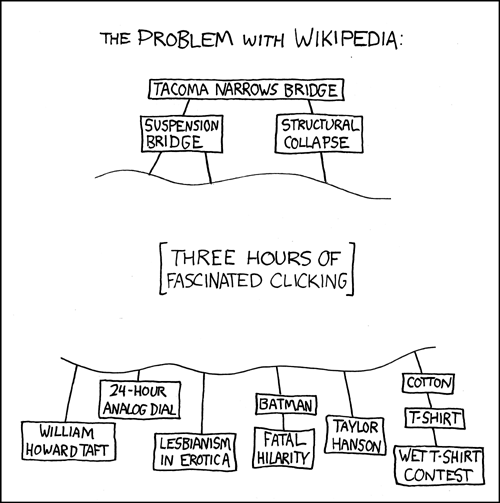
There, I've done it again. I came across some figure in the passing and ended up digging out the original reference in an attempt to make sense of it. In this case the figure is the energy-time-information triangle, proposed by Daniel Spreng in 1978, also known as Spreng's triangle. It supposedly conveys the message that new information technology (whatever that was in 1978) allows to save either time or energy, or a combination thereof. Clearly, I thought, the paper was written before the dawn of Wikipedia...


Spreng has a background that is noteworthy. Trained as a physicist, he later worked as engineer and developed an interest in economics. His triangle is an attempt to connect these areas, and as such very interesting. The example he starts with is purely thermodynamical. A reversible process, without loss of energy, would take an infinite amount of time. Any faster, and the process becomes irreversible. The faster it is, the more energy is needed (at least in the examples Spreng discusses). So there is a trade-off between time and energy that carries over to manufacturing. Information then comes in as an improved technology that makes the process more efficient, and so, more information saves time or energy. That is the basic idea.

Spreng's original paper is here, but I couldn't get access to it, so I settled for the 1993 remake and the following is my summary. You can find the original version of Spreng's triangle on page 13 of this file. I've redrawn it for your convenience, click to enlarge.

Spreng's Triangle

Spreng's triangle is a plane with 3 axes at 120° to each other. The 3 axes are energy (E), time (T) and information (I) respectively. I have drawn lines with constant time in blue, constant information in red, and constant information in green. In the lower right E=0 corner, that Spreng refers to as the "starving philosopher," one needs no energy, but has an infinite amount of time and all the information in the world. In the lower left, I=0, corner, that Spreng refers to as the "primitive man," one has no information and needs an infinite time to get anything done with maximal energy. In the upper corner, the "industrial man," one has plenty of information and energy to get things done in zero time. The corners are however unrealistic limits that shouldn't be taken too seriously, they're just to show the trends if you move around in the diagram.

Now to define a point in a plane you only need two axes, so the relevant statement here would be that all possible points of combinations E,T,I lie in a plane. I say "would be" because I will argue in the following that though superficially plausible and appealing, I don't think it is actually the case.

In his paper, Spreng discusses in which way energy, time, and information partly substitute for each other from several different aspects.

At some point, he claims for example that in industrial countries on a national level working hours substitute for energy use, citing himself in mentioned earlier paper that I had no access to. So I plotted the working time per year per worker from this table, against the annual energy consumption per capita from this table (in kilogrammes of oil equivalent per year).


I don't know about you, but I can't see any correlation or anti-correlation in that. Well, the data I used is from 2003, so, possibly 40 years ago that looked different, but I can't say I am very convinced. However, this turns out not to be of much importance later, he just uses this because he wants to send a message that civilization should slow down the hamster wheel (invest time) to instead save energy:
"Whether the time saved is simply used to produce and consume more, or whether some saved time is set aside as time for cultural development is of prime importance."

One easily sees from Spreng's discussion, that the "information" he is referring to is ill-defined. To be fair however, it does become clear that he is talking about manufacturing processes and their improvement. So Wikipedia isn't really a counterexample. At some point he specifies information to mean 'relevant' information, yet one doesn't know relevant for what. Maybe it's the information needed to decrease energy or time, but then the argument becomes circular. I think the name "information" is very misleading. What he seems to mean is something like the complexity of a technological process. Not that this is better defined.

However, just when I was about to throw the paper in the garbage, Spreng goes and admits that the "relevant information" is totally ill-defined and pulls the following trick that helped me to make more sense out of his triangle. He says, let's just consider information as an unknown parameter and assume it is measured by the market: "[T]he market measures the information content of goods and services." So, let Y be the market value of a good or service, then he defines information (I) by the following equation
    Y = pL L+ pE E + I

where L is input to production of the good in working hours, pL the price per hour, E is the energy input in some units, and pE the price for that energy unit.

That would indeed define a surface if this equation would be fulfilled, so the question is, does it work? First, we note that this equation almost certainly isn't fulfilled for goods with cultural value like, say, Marilyn Monroe's dress. I don't see what difference it should make for the right side of the equation whether Marilyn or I wear a dress before auction, yet I have some doubts anybody would pay me some million bucks for that, so it does make a difference for the left side of the equation which is no good.

So then let's look at goods without cultural value, if such exist, maybe a banana will do. Still, something seems to be really funny with this equation. The alleged market value of the good doesn't at all depend on supply and demand for that good. I mean, I don't know a lot about economics, but if you're growing bananas in your backyard with input E,I,L and suddenly all bananas in Brazil fall victim to epidemic monkey obesity, your backyard bananas would be in high demand and up goes Y without any change to the right side of the equation.

This is not to say that it is not possible to make sense out of Spreng's triangle, but at least from what's in his 1993 paper it seems to me it would take more work to integrate this idea with economics. Spreng concludes his paper with the words
The importance of new information technology, NIT, in respect of future energy use can hardly be overstated. However, NIT can do two things. It can be used to substitute time by information or to substitute energy by information. NIT can, in other words, both be used to speed up the pace of life (work and leisure), thus promoting a society of harried mass consumers, or it can be used to conserve precious natural resources (energy and non-energy) by doing things more intelligently and improving the quality of life without adding stress to the environment. It is up to the society as a whole, politics of course included, to decide which of the
two roads are taken.”

You could then summarize my criticism as these are not the only two roads. Your NIT can also cost you more energy and more time. Like this damned Windows that never seems to finish updating and keeps popping up a message that I have to restart.

Bottomline: Plausible ideas are the most dangerous ones.

Monday, November 14, 2011

The Oscillating Universe

I came across this short story “The Oscillating Universe” by Dennis E. Piper, published in The Observatory, Vol. 97, p. 10P-10P (1977), (PDF available here), and thought you might enjoy it:

One day the Professor called me in to his Laboratory. “At last I have solved the equation,” he said. “Time is a field. I have made this machine which reverses the field. Look! I press this switch and time will run backwards run will time and switch this press I. Field a is time.” Said he, “Equation the solved have I last at”. Laboratory his to in me called Professor the day one. “For heaven's sake, SWITCH IT BACK,” I shouted. Click! Shouted I, “BACK IT SWITCH, sake heaven's for.” One day the Professor called me in to his Laboratory...

Sunday, November 13, 2011

Nerdy Riddle

What am I?

In the mirror I see three,
ψ is always part of me,
I am always positive
And like the I with double f.