Pages

Tuesday, January 08, 2013

Conform and be funded?

A recent issue of Nature magazine featured a study by Joshua Nicholson and John Ioannidis that looked at the citation count of principal investigators (PIs) funded by the US-American National Institute of Health (NIH).
    Research grants: Conform and be funded
    Joshua M. Nicholson, John P. A. Ioannidis
    Nature 492, 34–36 (06 December 2012) doi:10.1038/492034a
Ionnadis is no unknown, he previously published a paper "Why Current Publication Practices May Distort Science" that we discussed here, and is author of the essay "Why Most Published Research Findings Are False". The Nature article is unfortunately subscription only, so let me briefly summarize what it says before commenting.

Nicholson and Ioannidis analyzed papers published between 2001 and 2012 in the life and health sciences, catalogued by the Scopus database. They looked those who had received more than 1,000 citations by April 2012 and an author affiliation in the United States. They found 700 papers and 1,172 authors matching this query.

The NIH invites PIs of funded projects to become members of study sections. The purpose of NIH study section is to evaluate scientific merit. Nicholson and Ioannidis found that from the 1,172 top-cited authors only 72 were currently members of study groups, and most of these 72 (as expected) currently received NIH funding. However, these 72 top-cited scientists are merely 0.8% of all section members. Maybe more insightful is that they further randomly selected 200 of the top-cited papers and excluded those with authors in a study group. From the remaining top-cited authors, only 40% are currently receiving NIH funding.

In a nutshell, this is to say that the majority of authors of research articles in the life and health sciences that were top-cited within the last decade do not currently receive NIH funding.

That's as far as the facts are concerned. Now let's see how Nicholson and Ioannidis interpret this finding and what they conclude. In the beginning of the article, they are careful to point out that scientific success is difficult to measure and the citation count should be regarded with caution:
    "The influence of scientific work is difficult to measure, and one might have to wait a long time to understand it. One proxy measurement is the number of citations that scientific publications receive. Using citation metrics to appraise scientists and their work has many pitfalls... However, one uncontestable fact is that highly cited papers (and thus their authors) have had a major influence, for whatever reason, on the evolution of scientific debate and on the practice of science."
However, towards the end of the paper they write:
    "The mission of the NIH is to support the best scientists, regardless of whether they are young, old or in industry... Such innovative thinkers should not have so much trouble obtaining funding as principal investigators. One cannot assume that investigators who have authored highly cited papers will continue to do equally influential work in the future. However, a record of excellence may be the best predictor of future quality, and it would seem appropriate to give these scientists the opportunity of funding their projects."
Note how now authoring a highly cited paper is synonym for being an "innovative thinker" and "may be the best predictor of future quality". In fact, they go even farther than that by arguing that all authors of highly-cited papers should have their projects NIH funded (apparently regardless of what this project is):
    "Funding all scientists who are key authors of unrefuted papers that have 1,000 or more citations would be a negligible amount in the big picture of the NIH budget, simply because there are very few such people. This could foster further important discoveries that would otherwise remain unfunded in the current system."
I find the above closing paragraph of the article simply stunning. They seriously argue that something must be wrong with NIH funding -- according to their elaboration it's a "networked system" in which "exceptionally creative ideas may have difficulty surviving" -- because the NIH does not automatically fund projects of authors with papers who gathered more than 1,000 citations within the last decade.

Now I know nothing about funding problems in the life sciences. Maybe they have a good reason to hold a grudge against NIH peer review practice. Be that as it may, the facts do simply not support their arguments. I am tempted to say it actually speaks in favor of the NIH that they do not pay so much attention to the citation count because, as the authors write themselves, it's a questionable measure: It measures not only innovative thinking, but also fashions and just usefulness (reviews and illustrative diagrams tend to gather lots of citations), it moreover picks up social dynamics, popularity of the authors, or the amount of secondary work that is created, irrespective of whether that work is particularly insightful.

Many top-cited works are created because somebody has been fast enough to jump onto a topic about to take off. Is that a sign for not being "conform", as the title of the article suggests? I am trying to imagine that somebody would argue that all top-cited physicists should get their projects funded without peer review. And would try to publish this as an essay in Nature.

Friday, January 04, 2013

Gravitational bar detectors set limits to Planck-scale physics - Really?

Contains 10-31% juice.
Three weeks ago, Nature Physics published, to my surprise, another paper on quantum gravity phenomenology:
The appearance of the word “macroscopic” in the title should be a warning sign.

As we discussed previously, there are recurring attempts in the literature on quantum gravity phenomenology to amplify normally tiny and unobservable effects by using massive systems. This is tempting because in macroscopic terms the Planck mass is 10-5 g and easy to reach. The problem with this attempt is that such a scaling-up of quantum gravitational effects with the total mass of a system isn't only implausible as an amplification, it is known to be wrong. Next two paragraphs contain technical details, you can skip them if you want.

The reason this amplification for massive systems appears in the literature is that such a scaling is what you, naively, get in approaches with non-linear Lorentz-transformations on momentum space that have been motivated by quantum gravity. If Lorentz-transformations act non-linearly the normal, linear, sum of momenta, this linear sum is no longer invariant under Lorentz-transformations and thus does not constitute a suitable total momentum for objects composed of many constituents.

It is possible to introduce a modified sum, and thus total momentum, that is invariant. But this total momentum receives a correction term that grows faster than the leading order term with the number of constituents. The correction term is suppressed by the Planck mass, but if the number of constituents is large enough, the additional term will become larger than the (normal) leading order term. This would mean that momenta of macroscopic objects would not add linearly, in conflict with what we observe. This issue has been called the “soccer ball problem”; accepting it is not an option. Either this model is just wrong, or, as most people working on it believe, multi-particle states are subtle and the correction terms stay small for reasons that are not yet well understood. To get rid of these terms, a common ad-hoc assumption is to also scale the Planck mass with the number of constituents so that the correction terms remain small. Be that as it may, it's not something that makes sense to use for “observable predictions”.

Earlier last year, Nature published a paper in which the questionable scaling was used to make “predictions" for massive quantum oscillators. Since this prediction is not based on a sound model, it is very implausible that anything like this will be observed.

The authors of the new paper now propose to precisely measure the ground state energy of a gravitational wave detector, AURIGA. In theories with a modified commutation relation between position and momentum operators, this energy receives correction terms. Alas, such modified commutation relations either break Lorentz-invariance, in which case they are very tightly constrained already and nothing interesting is to be found there. Or Lorentz-invariance is deformed, which leads to the necessity to modify the addition law and we're back to the soccer-ball problem.

So you might suspect that the new paper by Marin et al suffers from a similar problem as the previous one. And you'd be wrong. It's much better than that.

The authors explicitly acknowledge the necessity to understand multi-particle states in the models that they aim at testing, and present their proposal as a method to resolve a theoretical impasse. And while they talk about very massive objects indeed (the detector bars have a mass of about 105 kg), they do not scale up the effect with the mass (see eq 4). Needless to say, this means that the effect that they get is incredibly tiny, about 33 orders of magnitude away from where you would expect quantum gravitational effects to become relevant. They modestly write “Our upper limit... is still far from forbidding new physics at the Planck scale.”

Here's the amazing thing. For all I can tell, not knowing much about the AURIGA detector, the paper is perfectly plausible and the constraint makes indeed sense. I have nothing to complain about. In fact they even cite my review in which I explained the problem with massive systems.

The only catch is of course that the limit that they obtain really isn't much of a limit. If Nature Physics was consistent in their publication decisions, they should now go on and publish all limits on Planck scale physics that are less than 34 orders of magnitude away from being tested. I am very much looking forward to this. There are literally hundreds of papers that compute corrections due to modified commutation relations for all sorts of quantum mechanics problems. I should know because they're all listed and cited in my review. Expect an exponential growth of papers on the topic. (I am already dreading the day I have to update my review.) Few of them ever bother to put in the numbers and look for constraints because rough estimates show that they're far, far, away from being able to test Planck scale effects.

The best constraints on these types of models is, needless to say, my own, which is a stunning 56 orders of magnitude better than the one published in Nature.

So it seems that for once I have nothing to complain. It's a great paper and it's great it was published in Nature Physics. Now I encourage you all to compute Planck scale corrections to your favorite quantum mechanics problem by adding an additional term to the commutation relation, and submit your results to Nature. How about the g-2, or the Casimir effect? Oh, and don't forget that somebody should think about the soccer-ball problem...

Tuesday, January 01, 2013

Private Funding for Science – A Good Idea?

Two years ago Warren Buffett asked the community of the super-rich to make a “Giving Pledge”: to commit to donating half of their money to charity. His effort made headlines, and some fellow billionaires joined Buffett’s pledge, among others Bill Gates, George Lucas and Mark Zuckerberg.

Money bags. WPClipart.
The wealthy Europeans however have remained skeptic, for good reasons. Money brings influence – influence that can conflict with democratic decisions, a fact that Europeans seem to be more acutely aware of than Americans. The German Peter Krämer, who I guess counts as rich though not as super-rich, said about Buffett’s pledge:
    “In a democratic nation, one cannot allow billionaires to decide as they please which way donations are used. It is the duty of the government, and thus in the end that of the citizens, to make the right decisions.” [Source]
Instead, Krämer argues that taxes should be raised for the upper class. Since nobody is listening to his wish of being taxed, he launched his own charitable project “Schools for Africa.”

The NYT last month raised the question “[C]an charity efficiently and fairly take the place of government in important areas? Or does the power of wealthy patrons let them set funding priorities in the face of government cutbacks?” In the replies, Chrystia Freeland from Thomson Reuters relates how a wealthy American philanthropist coined the term “self-tax” for charitable donations, and she brings the problem to the point:
    “From the point of view of the person writing the check, the appeal of the self-tax is self-evident: you get to choose where your money goes and you get the kudos for contributing it.

    But for society as a whole, the self-tax is dangerous. For one thing, someone needs to pay for a lot of unglamourous but essential services, like roads and bank regulation, which are rarely paid for by private charity.

    Even more crucially, the self-tax is at odds with a fundamental democratic principle -- the idea that we raise money collectively and then, as a society, collectively choose how we will spend it.”
The same discussion must be had about private funding of science.

Basic research, with its dramatically high failure rate, is for the most part an “unglamorous” brain exercise whose purpose as well as appeal is difficult to communicate. Results can take centuries to even been recognized as results. The vast majority of researchers and research findings will not even make a footnote in the history of science. Basic research rarely makes sexy headlines. And if, it is because somebody misspelled hadron. All that makes it an essential, yet unlikely, target of private donations.

Even Jeffrey Sachs, after some trial and error, came around to realize that raw capitalism left to its own devices may fail people and societal goals. Basic investments like infrastructure, education, and basic research are tax-funded because they're in the category where the market works very badly, where pay-offs are too far into the future for tangible profits.

The solution to this shortcoming of capitalism cannot be to delegate decisions to the club of billionaires and hope they be wise and well-meaning. Money is not a good. It’s a virtual tool to direct investment of real resources: labor, energy, time. The central question is not whose money is it, but how resources are best put to use.

We previously discussed a specific type of private funding of science: crowdfunding. The problem with crowdfunding is that chances of funding depend primarily on the skilled presentation of a project, and not on its potential scientific relevance.

A recent article in Time Magazine “Crowdfunding a Cure” (subscription only) reported a trend from the United States in which online services allow patients and their relatives to raise money to pay for medical treatments, organ donations, or surgeries. One obvious problem with this approach is fraud. (If you think nobody would possibly want to fake cancer, think twice and read this.) What bothers me even more is the same issue as with the crowdfunding of science: You better be popular and good at social networking if you want to raise enough money for a new kidney. Last week’s issue of Time Magazine published a reader’s comment from Claes Molin, Sweden. This is how crowdfunding medical treatments looks from the Scandinavian perspective:
    “It is moving to read about the altruism displayed by crowdfunding for medical procedures, and I don’t doubt the sincerity of the donors. But the steps described to raise money, including displaying personal details for strangers to see and remembering to say “thank you,” sound a lot like being forced to beg. I understand that values differ, but government-funded health care would let people keep their dignity, along with their peace of mind, in the face of life-threatening disease.”
A thesis project isn’t as serious as a life-threatening disease, but the root of the problem with crowdfunding either is the same. Crowdfunding is neither an efficient nor a fair way to distribute money, and thus the resources that follow. It is a simple way, a presently popular way, and a last hope resort for those who have been failed by their government. But researchers shouldn’t be forced to waste time on marketing like patients shouldn’t be forced to waste time on illustrating their sufferings, and in neither case should the success depend on the popularity of their presentation.

Be that as it may, crowdfunding is and will most likely remain a drop in the drying lake of science funding. I strongly doubt it has the potential to significantly change the direction of scientific research; there just isn’t enough money to go round in the crowd. Paying attention to private funding by wealthy individuals is much more pressing.

Wealthy donors often drive their own agenda. This bears a high risk that some parts of research, the “unglamorous” but essential parts, simply do not receive attention, and that researcher’s interests are systematically skewed to the disadvantage of scientific progress.

The German association of science foundations (“Deutscher Stifterverband für die Wissenschaft”) is, loosely speaking, a head organization for private donors to science that manages funds. (Note that the German use of the word “science” encompasses the natural and social sciences as well as the humanities and mathematics.)

I once spent a quite depressing hour browsing through the full list of in total 560 foundations that they have to date (this includes foundations exclusively for scholarships and prizes). 56 of them are listed under natural sciences and engineering. There isn’t a single one remotely related to quantum gravity or physics beyond the standard model. The two that come closest are the Andrejewski Foundation that hands out a total of EUR 9000 per year to invite lecturers on topics relating math and physics, and the Schmidt Foundation for basic research in the natural sciences in general, which however has an even smaller total funding. (Interestingly, their fund is distributed by the German Research Foundations and, so I assume, subject to the standard peer review.)

Then what do people donate to in the natural sciences? Most donors, it seems, donate to very specific topics that are closely related to their own interest. Applications of steel for example. Railroad development. The improvement of libraries at technical universities. The scientific cooperation between Hungary and Germany. And so on.

So much about the vision of the wealthy. To be fair however, the large foundations are not to be found in this list, they do their own management. And there exist indeed the occasional billionaires with an interest in basic research in physics, such as Kavli, Lazaridis, Tschira, Templeton. And, more recently, Yuri Milner with his sur-prizes.

If you work like me in a field that seems constantly underfunded, where you see several hundred applications for two-year positions and people uproot families every other year to stay in academia, you are of course grateful to anybody who eases financial pressures.

But what price is the scientific community paying?

Money sets incentives and affects researcher’s scientific interests by offering funding, jobs, or rewards. The recurring debate over the influence of the Templeton foundation touches on this tension. And what effect will Milner’s prizes have on the coming generation of scientists? We have a lot to lose in this game if we allow the vanity of wealthy individual to influence what research is conducted tomorrow.

There is another problem with private funding, which is lack of financial stability. One of the main functions of governmental funding of basic research is its sustained, continuous availability and reliability. High quality research builds on educational and technological infrastructure and expertise. It withers away if funding runs dry, and once people have moved elsewhere or to other occupations, rebuilding this infrastructure and attracting bright people is difficult and costly. Private donations are ill-suited to address this issue. A recent Nature Editorial “Haste not Speed” comments on the problem of stability with US funding in particular:
    “[W]hen it comes to funding science, predictability is more of a virtue than speed, and stability better than surprise.”
All this is not to say that I disapprove of private funding. But as always, one has to watch out for unwanted side-effects. So here’s my summary of side-effects:
  • Interests of wealthy individuals can affect research directions leading to an inefficient use of resources, leaving essential areas out of consideration. Keep in mind that the relevant question is not whose money it is, but how it is best used to direct investment of resources into an endeavor, science, with the aim of serving our societies.
  • When it comes to delicate questions like which scientific project is most promising, somebody’s personal interest or experience is not a good basis for decision. Short-circuiting peer review saves time and effort in the short run, but individual opinion is unlikely to lead to scientifically more desirable outcomes.
  • Eyeing and relying on private donations is tempting for governments and institutional boards, especially when times are rough. This slope can be slippery and lead to a situation where scientists are expected to “beg for money,” which is not a good use of their time and skills, and questionable to result in fair and useful funding schemes.
  • The volume of private funding and the interests of donors tend to be unstable, which makes it particularly ill-suited for areas like basic research where expertise needs sustained financial commitment.
So what is the researcher to do? If somebody offered to fund my project I probably wouldn’t say no: Obviously, I am convinced of the relevance of my own research! Neither would I expect anybody else to do so.

But whenever the situation calls for it, scientists should insist on standard quality control and peer review, and discourage funding schemes that circumvent input from the scientific community. Otherwise we’re passively agreeing on wasting collective effort. The standard funding scheme is taxation channeled to funding agencies. The next easiest thing is donations to existing funding agencies or established institutions, not purpose-bound. Private foundations and their review process are not necessarily bad, but should be treated carefully, especially when more opaque than transparent. And crowdfunding, hip as it sounds, will not work for the unglamorous, dry, incremental investigations that form the backbone of basic research.

Saturday, December 29, 2012

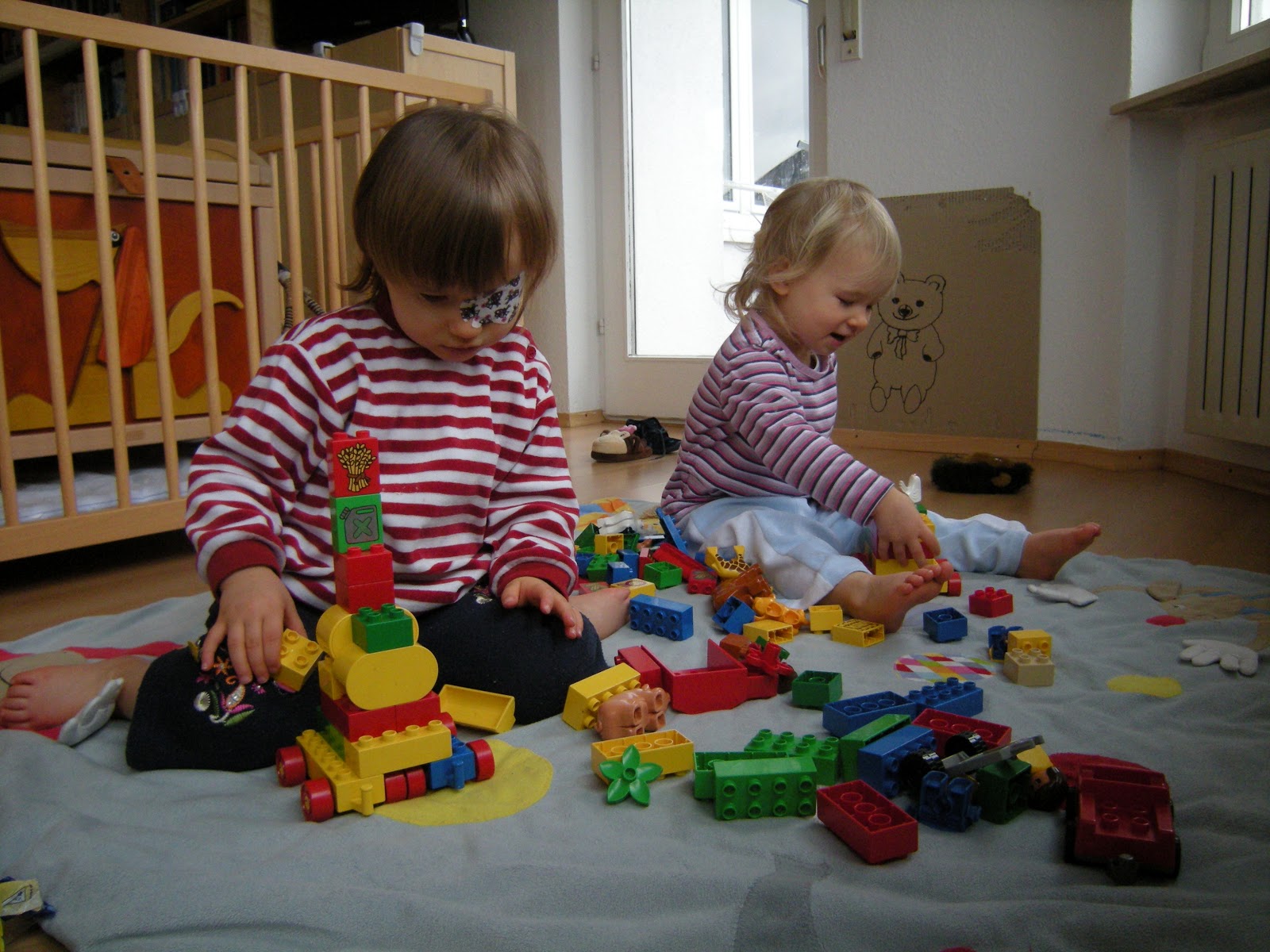
Happy Birthday Lara and Gloria!

Today our two beautiful girls are two years old! We have two cakes with two candles each and the apartment is full of balloons, awaiting the grandparents for a visit.


During the last year, Lara and Gloria have learned to walk and to run and to jump, to dance and to climb. Since a few weeks, they can climb out of their cribs, so time has come to upgrade the beds. We're browsing the IKEA catalog as I type, so to speak.  In their explorations, they have also suffered the occasional bruise or scratch, but luckily no major injuries. We too have gotten our share of bruises and scratches, mostly due to being hit with toys in a moment of inattentiveness.

For us, this year has been much more work than the first, because for most of the time we couldn't leave the kids unattended for even a second; they would inevitably tear something down, break something, spill something or topple over with the chair. It has gotten better during the last months. They know now fairly well what they can do safely, and they are careful not to touch anything that might be glass. We can let them walk around in the apartment now, so long as we recall to lock away the detergents and knives.

The girls are slow with learning to talk, though our pediatrician says this isn't so uncommon with twins. Gloria refers to herself as "Goo-kie" and to Lara as "Gah-kie" for reasons we don't know. They can now both eat by themselves, though one better doesn't leave them alone with the spaghetti.

When I contemplate the human brain, I am always torn between frustration about its shortcomings and amazement about how well it works. Watching the kids, what astonishes me most is how quickly and flawlessly they learn to identify objects. If you look at some picture book, the drawings are not usually too precise. Yet the kids have no problem to identify items from the books with our household items. And many items, such as most animals or large vehicles, they have never seen in reality, yet if they glimpse as much as a part of a tiger in an illustration, they'll announce "tee-ga". They also find Stefan's and my photos in the tiniest thumbnail versions from among dozens, instantly.

A source of amusement for us is how they construct causal and temporal relations. If they want to watch the washing machine for example, they sometimes pile laundry in front of it, not necessarily laundry that actually needs washing. If I forget to close the blinds for their afternoon nap, they'll scream and point at the window. When I come back from my morning run and the kids are already up, Lara will come and say "Mama. Ouh." and point to the shower. If they want Stefan to read them a book, they'll put a pillow on the floor where he usually sits.

The next year will bring many changes for the kids and for us, not only because of the new beds but also because they will spend more time with other adults and other children. We haven't yet completely solved our daycare problem, but it looks like it will resolve soon. Now it's time to light the candles :o)

Wednesday, December 26, 2012

Book review: “Phantoms in the Brain” by Ramachandran and Blakeslee

Phantoms in the Brain: Probing the Mysteries of the Human Mind
By V. S. Ramachandran, S. Blakeslee
William Morrow Paperbacks (1999)

Yes, I’ve read another neuroscience book. This one has been recommended to me as one of the classics in the field, though a little dated by now. It didn’t disappoint.

Ramachandran takes the reader on an engaging tour through the functions of the brain by using case studies on patients with brain damage. At first I thought this would be a collection of heart-wrenching stories and bizarre peculiarities – nobody really doubts shit happens if an iron pole leaves a hole in your head. But I was surprised to learn how reproducible the effects of localized brain damage are, how strange, and how much can be learned from the unfortunate patients.

The book starts with phantom limbs and our body image in general, followed by sections on denial, memory, religious thought, emotions, laughter, delusions and hallucinations. The chapters usually start with a patient or several, and are followed by an explanation of what brain regions are involved and what they do, to the extent that one knows. Ramachandran then often discusses some experiments that he and his collaborators did to shed light on puzzles going along with the condition, sometimes leading to insights that could help the patient or at least provide a basis for the development of treatments. He also adds his own speculations and hunches, which I find very interesting. He is usually very clear in demarking where actual knowledge ends and his speculation starts.

I was very pleased by his sober discussion of “qualia,” and his careful treading on the question of religion and the mind-body interaction in general. His argumentation is overall very balanced; he comes across as an open-minded scientist who isn’t pushing any particular agenda, but is simply driven by curiosity. I didn’t find his elaborations on the nature of consciousness too enlightening, but I guess consciousness is to neuroscience what the cosmological constant is to physics: everybody’s got an opinion about it and nobody finds anybody else’s opinion convincing.

The book is well written and reads very smoothly. It is however in places somewhat repetitive in that some patients reappear and one has to read through a summary. Some readers might appreciate that, especially if they had put aside the book for a bit, but it switches my brain into jah-jah-you-already-told-me-that mode. (The brain region for this is between the yawn-campus and the facebook-lobe.) I also have to complain that Ramachandran is quite vague on explaining what research has been done in the field apart from his own studies, and is too focused on his own work. Since the book is now more than a decade old, maybe it just wasn’t all that much. Still, I would have hoped for a somewhat broader survey.

(The co-author Sandra Blakeslee is credited in the acknowledgements for “making the book accessible for a wider readership.” The book is written in the first person narrative.)

Altogether, I learned quite a lot from this book, and especially the section on denial has given me something to think about. I’d give this book four out of five stars.

This TED talk by Ramachandran will give you a good impression what the book is about (the part about synesthesia is not in the book):

Monday, December 24, 2012

Merry Christmas!

We wish all our readers happy holidays and a merry Christmas, and if you're not celebrating Christmas, we wish you a good time anyway.


The girls are now old enough to take note of what is going on, so this year I've been thinking about our Christmas traditions.

In Germany, Christmas is celebrated on the evening of December 24th, the "holy night", with presents being deposited below the tree and opened either before or after dinner. A very common dinner on Christmas here is goose with red cabbage and dumplings. The presents are attributed not to Santa Claus but to the "Christuskind" (Christ child), usually depicted as a little angel. (I recall being quite confused as to whether its a boy or a girl.) Saint Claus' (Nikolaus) day on the other hand is in Germany not Christmas but December 6th. He delivers his goodies into boots that you place in front of the door over night. However, Saint Nikolaus comes with a dark brother, Knecht Ruprecht, who will slap the kids if they haven't been nice.

So tell me something about your Christmas tradition and how you celebrate!

Friday, December 21, 2012

Large Extra Dimensions - Not Dead Yet

15 years ago large extra dimensions were on vogue.

The idea that our universe may have additional spatial dimensions so small we have not yet been able to observe them dates back more than a century. This idea received a tremendous boost by the realization that String Theory actually requires such additional dimensions for consistency, but they were normally assumed to be wrapped up to sizes about a Planck length, or 10-35m. That’s so small you can forget about it. (Forgetting about them being the reason to wrap them up to begin with.)

Then in 1998/99 some smart physicists realized that if there are extra dimensions, they could be much larger than the Planck length, and we wouldn’t have noticed. Better still, if these dimensions have the right size this would explain why gravity is so much weaker than the other interactions in the standard model, a problem called the “hierarchy problem” that causes physicists sleepless nights.

In these scenarios with large extra dimensions, the stuff that we are made of (quarks, electrons and so on) sits on a slice with three spatial dimensions, which is called a “brane”. This matter does not normally notice the additional dimension, but gravity does. This has the result that gravity is weak on long distances, but becomes much stronger on short distances, leading to a “lowered Planck scale” and quantum gravitational effects that are much larger than naively expected. Thus the excitement. (There are different models with different realizations of this, but the details won’t concern us in the following. For details read this earlier post.).

If one buys into this, one however has a new problem: The question why the extra dimensions have exactly this size. But sometimes finding a new way to formulate an old question can be a big step forward, so this should not deter us from exploring the idea.

Models with large extra dimensions also made predictions for the LHC due to the lowered Planck scale, most strikingly graviton and black hole production. In 2012, now that the end of the world is near, we know that nothing like this has been seen.

As I explained in this earlier post, it is quite rare that experiment can falsify a model, even if you might have heard so. Normally a model has free parameters that should be determined by experiment, or, if nothing is found, be constrained by experiment. That the LHC has not found evidence for large extra dimensions doesn’t falsify the idea, but it certainly “implausifies” it by constraining the parameters into an uninteresting range. Which is another way of saying, move on, there’s nothing to see here.

So you might think large extra dimensions are dead. But Cliff Burgess begs to differ. In two recent arXiv papers, he and his collaborators have put forward an extra dimensional model that offers an intriguing new perspective:

    Accidental SUSY: Enhanced Bulk Supersymmetry from Brane Back-reaction
    C. P. Burgess, L. van Nierop, S. Parameswaran, A. Salvio, M. Williams
    arXiv:1210.5405

    Running with Rugby Balls: Bulk Renormalization of Codimension-2 Branes
    M. Williams, C.P. Burgess, L. van Nierop, A. Salvio
    arXiv:1210.3753
The key point is that they are trying in the first place not to solve the hierarchy problem, but the cosmological constant problem: Why is the cosmological constant that we observe small and nonzero? The cosmological constant term in general relativity describes the energy of the vacuum and this energy should receive contributions all the way up to the Planck energy. This would be a huge contribution, leading to a very strong curvature of our universe, incompatible with observation. Why aren’t these Planck energetic quantum contributions there?

Burgess and his collaborators argue that a plausible reason is that space-time has additional dimensions, and the full space-time is not Lorentz-invariant. In other words, it’s a scenario with branes in higher dimensions. In such a situation, the troublesome quantum contributions, which normally, due to Lorentz-invariance, take on the form of a cosmological constant term, might not make themselves noticeable on the brane, which is where we live.

The example that they give is that of a cosmic string. If one calculates the metric that the string induces, one finds that space is flat but has a defect angle that depends on the string tension. The string itself however is unaffected by what it does to the background. The scenario that Burgess et al construct is basically a higher-dimensional version of this, where our universe plays the role of the string and creates a defect, but no curvature is induced in our universe itself.

Concretely, they have two additional large extra dimensions. (There might be more than that, but if they are much smaller their presence does not matter for the argument.) These additional dimensions have the topology of a sphere. On the two poles of the sphere, there are a brane each, one of which you can interpret as our universe. Like in the case with the cosmic string, the matter density on the branes induces a defect angle for the sphere, creating a manifold which they call a “rugby ball”. The radius of the sphere is flux-stabilized, which leaves one free parameter (a combination of the radius and the dilaton field).

These extra dimensions induce a vacuum energy on the brane, which is essentially the Casimir energy of this compact space, and this energy depends on the radius of the sphere. To use this scenario to get the right value of the cosmological constant, the radius should be of the order of about 5 μm, which is somewhat below current measurement precision (45 μm), but not so far below.

But what about the troublesome quantum corrections?

Supersymmetry must be broken on the brane (because we don’t see it) but is intact away from it. Supersymmetry solves the cosmological constant problem in the sense that it brings all the troublesome contributions in the bulk to zero. What remains to be shown though is that the cosmological constant on the brane does not receive large correction terms, which depends on the way the branes are coupled.

Cliff and his collaborators have shown that, in the scenario they constructed, the cosmological constant on the brane (read “in our universe”) does receive correction terms from high energies, but due to the way the branes are coupled these corrections are highly suppressed and do not ruin the smallness of the effective cosmological constant; they do not induce a large curvature. Think of the example with the cosmic string that stands in for higher dimensional branes. The geometry on the string (or brane) is flat regardless of the value of the tension. The large quantum corrections are there, but they contribute to the tension rather than inducing a curvature.

Now once you have fixed the radius of the “rugby ball” so that the cosmological constant matches with observation, you can use this to calculate the value of the lowered Planck scale. It turns out to be at least 10 TeV, so we wouldn’t see gravitons or black holes at the LHC. (Keep in mind that the LHC collides protons, which are composite particles. The average energy per individual collision of quarks or gluons is in most cases far below the total energy in the proton collision which is usually quoted. That’s why everybody wants a lepton collider.) However, since the string scale is somewhat below the Planck scale, one would expect to see string excitations at the LHC, though still at fairly high energies; we wouldn’t have seen them yet.

So to sum up, what this model achieves is the following: 1) It provides a setting in which there is a small cosmological constant whose small value is not ruined by large quantum corrections. 2) It makes the prediction that we should see corrections to Newton’s law not too far beyond present measurement precision. 3) It gives a plausible reason why we haven’t seen evidence for extra dimensions at the LHC so far but 4) predicts that we should see some glimpses of it in form of string excitations within the next years.

This doesn’t convince me to start working on large extra dimensions again, but it does convince me that large extra dimensions aren’t dead yet.

Monday, December 17, 2012

The Usefulness of Useless Knowledge

Abraham Flexner was one of the founders of the Princeton Institute for Advanced Studies. The other day I came across a wonderful essay, titled “The Usefulness of Useless Knowledge” (PDF) that he wrote in 1939, on the relevance of curiosity-driven basic research:
    “Much more am I pleading for the abolition of the word "use," and for the freeing of the human spirit. To be sure, we shall thus free some harmless cranks. To be sure, we shall thus waste some precious dollars. But what is infinitely more important is that we shall be striking the shackles off the human mind and setting it free...”
Flexner goes through historic examples in which progress came about by scientists not thinking about applications but driven to understand nature, which resulted in unforeseen breakthroughs that changed our lives. Needless to say, his examples (Maxwell's equations, Bose-Einstein Condensation, atom spectroscopy...) could not take into account the most stunning developments in the later part of the century, based on our increasingly better understanding of quantum mechanics that underlies pretty much all the little technological gadgets we put under the tree.

But despite his essay being 70 years old, the points are as timely today as they were then, and they have only grown more pressing: Without basic research, progress is not sustainable and applications will eventually run dry. Believing that applied research produces technological advances is like saying electricity comes from the holes in your outlet.

Flexner was also ahead of his time in clearly realizing that science is a community enterprise, driven by social dynamics and the interaction of experts, and not by single individuals working on their own:
    “[O]ne must be wary in attributing scientific discovery wholly to anyone person. Almost every discovery has a long and precarious history. Someone finds a bit here, another a bit there. A third step succeeds later and thus onward till a genius pieces the bits together and makes the decisive contribution. Science, like the Mississippi, begins in a tiny rivulet in the distant forest. Gradually other streams swell its volume. And the roaring river that bursts the dikes is formed from countless sources.”

Wednesday, December 12, 2012

AdS/CFT predicts the quark gluon plasma is unstable

The gauge-gravity duality is a spin-off from string theory and has attracted considerable attention for its potential to describe the quark gluon plasma produced in heavy ion collisions. The last news we heard about this was that the AdS/CFT prediction for the energy loss of quarks or gluons passing through the plasma does not agree with the data. The AdS/CFT community has so far been disappointingly silent on this issue, which has now been known for more than a year.

Meanwhile however, there has been an interesting new development pointed out by Brett McInnes in his papers
    Fragile Black Holes and an Angular Momentum Cutoff in Peripheral Heavy Ion Collisions
    Brett McInnes
    arXiv:1201.6443

    Shearing Black Holes and Scans of the Quark Matter Phase Diagram
    Brett McInnes
    arXiv:1211.6835
The dual description of the quark gluon plasma is a black hole in AdS space. Since the plasma resides in a beam pipe in a background metric that is to excellent approximation flat, the black hole that has to be used to describe it is a planar black hole. If one would use a “normal” spherical black hole, then the background for the plasma would have a spherical symmetry too.

These planar black holes appear alien at first sight because they have an infinitely extended planar horizon and are nothing like the real black holes that we have for example in the center of our galaxy. The planar black holes cannot in fact exist in an asymptotically flat space; they need the asymptotic AdS-space. So they might be alien in the context of astrophysics, but they make a lot of sense as a dual description for the quark gluon plasma.

Brett now notes the following. The quark gluon plasma that is created in heavy ion collisions generically has an angular momentum when the nuclei do not collide centrally. In particular, this angular momentum comes in the form of a shear, that is a non-trivial velocity potential in the direction parallel to the beam axis. The reason is, essentially, that the colliding heavy ions are approximately spherical (in their rest frame) and the amount of constituent particles that takes part in the collision depends on the distance from the beam axis. Thus arises a velocity profile.

So the quark gluon plasma has a shear. But this shear then should also be present in the dual description, ie for the black hole. In his paper, Brett studies such a sheared black hole in the AdS space – and the interesting thing is that he finds it to be unstable. If one takes into account that pairs of branes can be produced in the AdS background, then one can see that in fact an infinite amount of brane pairs can be produced because the brane action is unbounded from below.

But what does this mean?

The description of the quark gluon plasma that the AdS/CFT duality offers does not take into account that the formation, and subsequent fragmentation into hadrons, is a dynamical, time-dependent process. Brett thus argues that in a realistic situation after formation of the plasma it takes some while until the system is affected by the instability. He estimates the time it takes for the instability to develop and finds that for currently existing experiments at RHIC and at the LHC the plasma is stable for a time longer than it exists in the collision zone anyway. So there is nothing to observe in these experiments.

The relevant quantity here is the chemical potential. At RHIC and LHC it is very small, essentially because the collision is so highly energetic that very many particle-antiparticle pairs are created. However, for some upcoming new experiments, such as the ones planned at FAIR, that operate at a comparably low collision energy, the instability might become observable for realistic values of the impact parameter!

Brett is however very careful to point out that while the theoretic argument for the instability is solid, one should not take too seriously the numbers one obtains from his estimate. Since a truly dynamic treatment of the system is presently not feasible, what he does is instead is to calculate the time it takes for signals of an impending instability to propagate in the AdS background. One should not expect the result to be very precise.

Be that as it may, this opens the exciting possibility that upcoming experiments might observe an effect that could only be anticipated by use of the AdS/CFT duality.

Thursday, December 06, 2012

How liquid crystals handle conflicting boundary conditions

Two weeks ago, we discussed nematic films: thin layers of liquid crystals in solution, dropped on a substrate. These thin films are pretty to look at in polarized light, but they also teach us a lot about the behavior of the molecules in solution. Because the thin films can be easily manipulated with electric and magnetic fields, or changes in temperature and boundary conditions, they are excellent experimental territory.

This is interesting physics not only because we use liquid crystals and other types of soft matter in many every-day applications, but also because of their closeness to biological systems: Most of your body is molecules in solution, and most of your body’s processes depend on the organization and interaction of these molecules. Granted, most molecules in biological systems are larger and more complex than the molecules in these thin layers, but one has to start somewhere.

So let us look again at the image of the nematic film that we have seen earlier. Note the not quite regular stripes. Interesting.

Thin Nematic Film
Image source: arXiv:1010.0832 [cond-mat.soft]

This, it turns out, is not the only type of regular structure that one can find in nematic films if they are thin enough. Sometimes one also finds little squares.

Source. Image Credits: Oleg Lavrentovich

This behavior has puzzled physicists since it was first observed, almost 20 years ago. Especially it has not been understood theoretically at which thickness of the film such modulations start to appear and what determines their size. The width of the film is typically at least 20 times or so larger than the length of the molecules, so this cannot be the relevant scale.

This puzzle is what Oksana Manyuhina, now a postdoc at Nordita, and collaborators studied in their paper
    Instability patterns in ultrathin nematic films: comparison between theory and experiment
    O. V. Manyuhina, A.-M. Cazabat and M. Ben Amar
    Eur. Phys. Lett. 92, 16005 (2010)
    arXiv:1010.0832 [cond-mat.soft] 
The neat thing is how straight-forward their analysis is.

The nematic films are described by a vector field for the molecules orientation. The direction of the vector field does not matter, only its orientation. The system tries to minimize energy, which depends on the orientation of neighboring molecules relative to each other. Up to 2nd order in derivatives of the vector field there is a handfull of terms that can be written down with constants to parameterize their relative strength.

The relevant new ingredient to understand the structures in the thin films are boundary terms. The substrate below the film and the air above it have different chemical properties that lead to conflicting preferences for the molecules: At the liquid interface the molecules want to be parallel to the surface while at the air interface they want to be orthogonal to the surface.

Surface terms had been investigated before to account for the appearance of quasi-periodic structures, but without success. It was found instead that there should be structures at arbitrarily long wavelengths, in conflict with what the experiments show. In the above mentioned paper now a new term was added that introduces an energy penalty for relative angles between neighboring molecules at the plane of the interface. This has the effect that solutions for the vector field are no longer isotropic in the plane.

Once the expression for the energy is written down, one considers a perturbation of the system by rotating each molecule by a small angle, and does a linear stability analysis. This way one finds the energetically preferred configuration, at least as long as the linear approximation is good. And indeed, these configurations show a quasi-periodic behavior that sets in at some specific width of the film! Exactly when it sets in depends on the coupling constant in front of the new term, which can be nicely fitted with the data.

Below is a schematic image of how the molecules try to arrange themselves with the conflicting boundary conditions. You have to imagine the liquid substrate on bottom and air on top. The little rods represent the molecules of the liquid crystal. Note how, at the bottom, they are parallel to the surface while at the top they alternate between trying to remain parallel to the lower layers and trying to be orthogonal to the air interface – that is what causes the quasi-periodic structures.

Image credits: Oksana Manyuhina
This is such a nice example for how theoretical physics is supposed to work: An experimental result that can’t be explained. A mathematical model for the system, and an analysis that shows it can correctly describe the observations. We learned in this process about the relevance of boundary conditions, and that one should keep in mind configurations of a system need not respect the symmetries of the Hamiltonian (here: isometry in the plane parallel to the substrate).

Wednesday, December 05, 2012

I'm populär

The December issue of the Swedish magazine "Populär Astronomi" (Popular Astronomy) has a researcher profile about me. You can download a PDF here. For all I can tell, it's nicely written and accurate. If, in contrast to me, you actually speak Swedish, I would like to hear your opinion... I meet with the journalist, Anna Davour, during our cosmology program last month, after a glass of wine or two. It was a pleasure to talk to her and she did an excellent job.

The reason I'm grinning so stupidly in the photo is that we were looking for a whiteboard that would serve as background, and, when we found one, realized that none of us actually knew what the equations were about. Good thing one can't read them anyway. (We got as far as: It's a Hamiltonian. And something with spin couplings.)

And I have no clue what the header is supposed to mean.

Friday, November 30, 2012

The Holey Grail and its Dual: From String Theory to Strange Metals

Quantum Gravity: The Holey Grail.
Jonathan Granot’s colloquium slides have an amusing typo rendering quantum gravity the “holey grail of physicists.” How appropriate, I thought, and many of these holes are black. But typo aside, how holy really is this grail to physicists? After all, other areas of physics have their own holey grails: quantum computing for example, or high temperature superconductivity.

High temperature superconductors are badly understood theoretically, yet this understanding might allow us one day to create superconducting materials that save energy by avoiding resistive losses in long distance power lines. Imagine the potential! (Alternatively, read this.)

Presently the temperature at which these materials become superconducting is “high” only to the physicist who spends his days playing with liquid nitrogen: The transition temperature below which superconductivity sets in, also called the critical temperature, is in all known cases below -70°C. (The value depends on properties of the material as well as external fields.)

“Normal” superconductivity is described by the theory of Bardeen, Cooper and Schrieffer. At low temperatures, but in the not-superconducting phases, these metals are well described as Fermi liquids. But metals who display high temperature superconductivity are an entirely different story, and one that is largely unwritten.

One thing we know from experiment is that high temperature superconductors are “strange metals” whose electric resistance in the normal, non-superconducting, phase increases linearly with the temperature rather than with the square of the temperature. The latter is what one finds for a Fermi liquid with weakly coupled quasi-particles. Thus, plausibly the reason for our lacking theoretical understanding is that strange metals are strongly coupled system, which are notoriously hard to understand. “But darling,” said the string theorist, “I can explain everything.” And so he puts a black hole into an Anti-DeSitter (AdS) space and looks at the boundary.

The celebrated AdS/CFT correspondence makes it possible to deal with strongly coupled systems by mapping them to a weakly coupled gravitational system in a space-time with one more dimension. This is computationally more manageable, or at least one hopes so. So far, this correspondence, also called “duality”, between the gravity in the AdS space and the strongly coupled theory on the boundary of this space (thus one dimension less) is an unproved conjecture put forward by Juan Maldacena. However, it has been extensively tested for a few cases and many people are confident that it captures a deep truth about nature (though they might disagree on the extent to which it holds). We previously discussed this idea here and here.

For a high-temperature superconductor, one puts a planar black hole in the AdS space and decorates it with some U(1) vector fields and a scalar field, φ, and then goes on to calculate the free energy for different configurations of the scalar field. For temperatures above a critical value, the free energy is minimal if the scalar field vanishes identically. However, if the temperature drops below this critical value, configurations with a non-vanishing scalar field minimize the free energy, so the system must make a transition. In the figure below, you see the free energy, F, (with some normalization) as a function of the temperature (again with some normalization) for the case of φ = 0 (dotted line) and a case with non-vanishing φ (solid line). The latter solution doesn’t exist for all values of the temperature. But note that when it exists, its free energy is lower than that of the φ=0 solution.

[Image credits: Hartnoll, Herzog and Horowitz]

For these different configurations one can then calculate thermodynamic quantities of interest, such as the electric conductivity (AC and DC) or heat conductivity, and… compare the results with actual measurements.

As you can tell already from my brief summary, this approach to understand strange metals is, presently, far too rough to give quantitative predictions. It can however describe qualitative behavior, such as the scaling of the resistance with temperature that is so puzzling. And that it does quite well!

A bunch of smart people have been studying the strange metal duals for a couple of years now, among others Subir Sachdev, Sean Hartnoll, Hong Liu (who wrote a recent article for Physics Today on the topic), Shamit Kachru, Gary Horowitz, and a group here at Nordita around Lárus Thorlacius.

An exciting recent development is that Horowitz et al added a lattice structure by a periodic boundary condition, which is a big step towards modeling more realistic systems. Amazingly, despite the simplicity of the model, they scaling they find for the optical conductivity (the ability of photons to pass through a material) as a function of the photon’s frequency is in excellent agreement with experiment. (See “Optical Conductivity with Holographic Lattices” Gary T. Horowitz, Jorge E. Santos and David Tong, arXiv:1204.0519 [hep-th]).

One of the side-effects of commuting from Heidelberg to Stockholm is that the door sign with my name spontaneously relocates when I’m not at the institute, and I acquire new office mates in this process. Which is how I came to talk to Blaise Goutéraux, who arrived at Nordita this fall.

Blaise is among the AdS/CFT correspondents of Nordita’s “subatomic” group. (In fact, at this point I seem to be the only one in this group who doesn’t have anything to do with bulks and branes.) Blaise has taken on another challenge in this area, which is to describe the landscape of holographic quantum critical points, from which the strange metallic behavior at finite temperature is believed to originate. For this, he is working with more complicated geometries that exhibit different scaling behaviors from AdS.

What do we learn from this? The AdS/CFT correspondence is a useful tool, and if you’ve got a hammer quantum critical points might start looking like nails. But the only reason we call the bulk theory gravitational is that we first encountered a theory of this type when we wanted to describe the gravitational interaction. Leaving aside this scientific history, in the end it’s just a mathematical model to calculate observables that can be compared to experiment. And that’s all fine with me.

The big question is however whether this approach will ever be able to deliver quantitative predictions. For this, a connection would have to be made to the microscopic description of the material, a connection to the theories we already know. While this is not presently possible, one can hope that one day it will be. Then one could no longer think of the duality as merely useful computational tool with an educated guess for the geometry – the bulk theory would have to be a truly equivalent description for whatever is going on with the lattice of atoms on the boundary. But the cases for which the AdS/CFT correspondence has been well tested are very different from the ones that are being used here, and the connection to string theory, the original inspiration for the duality, has almost vanished. It wouldn’t be the first time though that physicists’ intuitions are ahead of formal proof.

Saturday, November 24, 2012

Is a tabletop search for Planck scale signals feasible?

In a recent arxiv paper, Jacob Bekenstein from the Hebrew University of Jerusalem proposed a tabletop experiment to test Planck scale signals:

    Is a tabletop search for Planck scale signals feasible?
    Jacob D. Bekenstein
    arXiv:1211.3816 [gr-qc]

The idea is roughly the following: Take a single photon and spread its wavefunction by suitable lenses, then let it hit some macroscopic solid block, for example a crystal. Focus the photon and detect it.

Since the crystal has a refractive index, the photon has to discard momentum into it. This momentum will be evenly spread into the crystal, distributed by phonons, and be returned to the photon upon exit. Essentially, the block reacts not like single atoms but in one piece (though it cannot instantly do so, the distribution of momentum must take a finite amount of time).

If you give the crystal a momentum for the duration of the photon’s passage, it will move, but since it’s macroscopically heavy, it will move only a tiny distance. If you look at the shift of its center-of-mass, the distance it will move scales with the energy of the incoming photon over the mass of the block.

Bekenstein puts in the numbers and finds that with presently available technology, the energy of a single photon could be so tiny that the distance the crystal moves would have to be smaller than the Planck length. This, he argues would “occasionally be at odds with the non-smooth texture of spacetime on Planck scale.” If that is so, the photon would not be able to transverse the crystal, leading to an unexpected, and observable, decrease in the transmission probability.

He also estimates sources of noise that could move the block oh-so slightly and affect the probability of the photon trespassing, thus rendering the outcome inconclusive. Bekenstein argues that by cooling the block to some Kelvin, which is cold indeed but still feasible, the noise could be kept under control. This might seem implausible at first sight, but note that the thermal noise for the motion of the center-of-mass itself is not the problem because the photon spends only a very short time inside the crystal. The relevant question is whether the center-of-mass moves in that short duration. 

So far, so brilliant. The proposed experiment is an excellent example for a model-independent test. It is so model-independent in fact that I don’t know which model could be constrained by it.

The usual expectation from Planck-scale fluctuations is that they lead to a position uncertainty that cannot become smaller than the Planck length. This does not forbid you to move an item by distances less than the Planck length, it just tells you that the position of the crystal wasn’t defined to a precision better than the Planck length to begin with.

Now, if space-time was a discrete regular lattice with Planck-length spacing then you could not move the crystal, as a rigid block, by anything shorter than the Planck length. Already if the lattice isn’t regular, this is no longer true. But even if the lattice was regular, the crystal would have to be very rigid indeed, so as to not allow any relative shift among atoms that could account for the motion of the center-of-mass. For example, if your block has a number of particles about Avogadro’s number, 1023, and you move one out of 1015 of these atoms by a distance of 10-20 m (that’s less than the size of a proton and less than the LHC can probe), you’d move the center of mass by about a Planck length. Now I don’t know much about crystals, but it seems quite implausible to me that the effective description of phonons on the lattice should be sensitive to such tiny shifts at all (even worse if the block is not a crystal but some amorphous solid).

Besides this, I don’t understand how the “rejection” of the photon should come about if one took the path integral of all possible trajectories and scatterings in the crystal, none of which is sensitive to Planck scale effects.

In summary: The proposed table-top argument tests a quantity, the shift of the crystal’s center-of-mass, which is of the order Planck length. It is unclear however if there is any plausible model for the phenomenology of quantum gravity that would be constrained by this a measurement. Is a tabletop search for Planck scale signals feasible? Maybe. Is it possible with the proposed experiment? Probably not. Does it have to do anything with Planck mass black holes? No.

Monday, November 19, 2012

There's no free lunch - and no free news either

I read last week that the German daily newspaper "Frankfurter Rundschau" declared bankruptcy. While it's not the first and probably not the last newspaper to throw in the towel, this saddened me considerably because it's the newspaper I've grown up with. Some years ago, when back in Europe, I checked their website and found it confusing to useless. I never gave it a second look, and haven't bought a print issue since forever. So to make matters worse now I feel personally responsible for sinking a newspaper I actually thought was pretty good. I also haven't bothered you for a while with my terribly insightful diagrams, so here are two to depict the problem.


The first one shows the present situation of online news providers. We get the news "for free" because they're paid by advertisement revenue. But this money has to come from somewhere, so we pay for it with the product that's being advertised. Now nobody really likes all the advert clutter around or even covering the news, and advertisement techniques are shifting. The problem is then that if newspaper advertisement doesn't yield results, and companies cut it out of the cycle, they cut off your news feed with it. What bothers me even more is that long before this happens newspapers have a large incentive to produce content that increases the number of people clicking on adverts. It is questionable this benefits the quality of information.


The second diagram shows how the situation would look like if we'd manage to get over the idea that information is free. All content has to be produced somewhere by somebody and that somebody needs to live from something. It would make more sense to directly pay for news because the feedback loop isn't distorted by product sales. If you cut out the marketing here, you cut yourself off information about products and services, which would lead to incentives for more sensible advertisement rather than to incentives for more traffic-generating content aggregation.

Most providers of online news actually represent a mixture of these two cases, but the first case has become very dominant within the last decade or so. During the last years there has been a trend to subscriptions for online content, notably realized by the NYT paywall. Now the NYT is a very prominent newspaper with a large readership, and that it seems to be working for them doesn't mean it will be working for everybody. The problem is that the subscribers still pay, implicitly, for the advertisement cost with purchase of products. As long as there are news financed entirely or to a large extent by adverts, capitalism predicts people will prefer them (unless they are of considerably worse quality that is), and it will be very difficult for pay-for-content news providers to generate enough revenue.

Thursday, November 15, 2012

Book review: “Brain Bugs” by Dean Buonomano

Brain Bugs: How the Brain's Flaws Shape Our Lives
By Dean Buonomano
W. W. Norton & Company (August 6, 2012)


We have to thank natural selection for putting a remarkably well-working and energy-efficient computing unit between our ears. Our brains have allowed us to not only understand the world around us, but also shape nature to suit our needs. However, the changes humans have brought upon the face of the Earth, and in orbit around it, have taken place on timescales much shorter than those on which natural selection works efficiently. And with this comes the biggest problem mankind is facing today: We are changing our environment faster than we can adapt to it - evolution is lagging behind.

The human body did not evolve to sit in an office chair all day long, neither did we have time to adapt to an overabundance of food, travel over different time-zones, or writing a text-message while driving on a 6-lane highway. We have absolutely no experience in governing the lives of billions of people and their impact on ecological systems. These are not situations our brains are well suited to comprehend.

There are four ways to deal with this issue. First, ignore it and wait for evolution to catch up. Not a very enlightened approach as we might go extinct in its execution. Second, the Amish approach: keep the environment in a state that our brains evolved to deal with. Understandable, but not for the curious and not realistically what most people will sign up to. Third, tweak our brains and speed up evolution. Unfortunately, our scientific knowledge isn't yet sufficient for this, at least not without causing even larger problems. This then leaves Fourth: Learn about our shortcomings and try to avoid mistakes by recognizing and preventing situations in which we are prone to make errors of judgement.

I recently reviewed David Kahneman's book "Thinking, Fast and Slow", which focuses on a particular type of shortcoming in our judgement, that is that we're pretty bad in intuitively estimating risks and making statistic assessments. Dean Buonomano's book includes these biases that are focus of Kahneman's work, but offers a somewhat broader picture, covering other "brain bugs" that human have, such as memory lapses, superstition, phobias, and imitative learning. Buonomano is very clear in pointing out that all these "bugs" are actually "features" of our brains and beneficial in many if not most situations. But sometimes what is a useful feature, such as learning from others' mishaps, can go astray, as when watching the movie “Jaws” leaves people more afraid of being eaten by sharks than of falling victim to heart attacks.

Dean Buonomano is professor for neurobiology and psychology at UCLA. His book is easy to follow and well written. It moves forward swiftly, which I have appreciated very much because it turns out I knew almost everything that he wrote about already, a clear sign that I have too many subscriptions in my reader. The illustrations are sparse but useful, the endnotes are helpful, and the reference list is extensive.

I have only one issue to take with this book, which is that Buonomano leaves the reader with little indication on how well established the research is that he writes about. In some cases he offers neurological explanations for "brain bugs" that I suspect are actually quite controversial among specialists - it would be surprising if it wasn't so. He has an interesting opinion to offer on the origin of religious beliefs that he clearly marks as his own, but in other instances he is not as careful. Since I'm not an expert on the topic, but generally suspicious about results from fields with noisy data, small samples, and large media attention, I'm none the wiser for what the durability of the conclusions is concerned.

In summary: This book gives you a good overview on biases and shortcomings of the human brain in a well-written and entertaining way. You will not get a lot of details about the underlying scientific research, but this is partly made up for with a good reference list. I'd say this book deserves four out of five stars.

Monday, November 12, 2012

Thin Nematic Films: Liquid Beauty

Image source: arXiv:1010.0832 [cond-mat.soft]

No, it's not a moon passage in front of an exoplanet. It's a thin nematic film. Let me explain.

Between condensed matter physics and chemistry, between solids and liquids, there is soft condensed matter. Soft condensed matter deals with the behavior of materials like gels, glasses, surfactants, or colloids. Typically these are fairly large molecules, possibly floating in some substrate, and can assemble to even larger structures. Understanding this assembly, the existence of different phases, and also the motion of the molecules is mathematically challenging due to the complexity of the system.

But taking on this challenge is rewarding: Soft matter is all around you, from toothpaste over body lotion to salad dressing. It is even quite literally in your veins. One of the best known examples for soft matter however is probably not blood, but liquid crystals.

Liquid crystals are rod-like molecules whose chemical structure encourages them to collectively align. How well this works depends on variables in the environment, for example temperature and magnetic fields. Liquid crystal have different phases; the transition between them depends on these environmental variables. In the so-called nematic phase molecules are locally aligned but still free to move around, and the orientation might change over long distances.

To make the molecule orientations visible, one uses polarized light on a thin film of liquid crystals on some type of substrate and a polarization filter to take the image. The liquid crystal molecules change the polarization of the light depending on the molecules' orientation, so different light intensities become a measure for the orientation of the molecules.

For the images we are looking at here we have the substrate below the liquid crystal and air above it. These two different surfaces causes a conundrum for the molecules in the liquid crystal, because they would prefer to align parallel to the substrate, but vertical to the air surface. Now if the film is fairly thick - "thick" meaning a μm or more - the molecules manage to align along threads that bend to achieve this orientation, though there are the occasional topological defects in this arrangement, places where the molecules change orientation abruptly. This is what you see for example in the image blow

[Picture Credits: Oleg Lavrentovich from the Liquid Crystal Institute at Kent State University, for more pictures see here.]

But this behavior changes if the film becomes very thin, down to a tenth of a μm or so. Then, the competing boundary conditions from the two interfaces start getting in conflict with the molecules' desire to align, which breaks the symmetry in the plane of the liquid and leads to the formation of periodic structures, like the ones you see in the first image. In this example, the nematic film does not cover the whole area shown, but it's a drop that covers only the parts where you see the periodic structures. This has the merit that one can see that the orientation of the structure to the boundary is always perpendicular.

The typical molecules in these films are not very large. In the example here, it's 6CB with the chemical structure C19H21N. The size of this molecule is much smaller than the width of the film when the effect sets in, so this cannot be the relevant scale. The question at which width the instability sets in has been studied in this paper, where also the image was taken from. It's an intriguing effect that can teach us a lot about the behavior of these molecules, not to mention that it's pretty.

Thursday, November 08, 2012

CMB anisotropy, 13 years later

Sean wrote a wonderful post about the recent measurement of the anisotropies in the cosmic microwave background from the South Pole Telescope. I am so impressed by the data. To give you a visual impression on just how dramatically the measurements have improved, I've dug out an old plot from 1999. (Note the square root in the vertical axis though.)

Fig1: CMB power spectrum, 1999, data from Python (star) and Viper (box). Image source.
Fig 2: CMB power spectrum, 2012, data from WMAP7 and SPT.  Image source.
For more information about the CMB anisotropies, please refer to this or this earlier post.

Tuesday, November 06, 2012

Program: Run your own!

This month, we have a program on "Perspectives of Fundamental Cosmology" here at Nordita, which I've been organizing together with Martin Bojowald, Kristina Giesel and Mairi Sakellariadou. Since it's a format for scientific meetings that is not so common, I thought it would be worthwhile to tell you a few words about it.

The purpose of running a program is to get researchers together for an extended amount of time, to give them the opportunity not only to get to know each other and share their ideas, but also have the time and space to work on this ideas, discuss them, and to find new collaborators. A workshop or a conference is usually too short and the schedule too packed to really allow participants to have much constructive exchange. And in contrast to a school, the talks and lectures at the program are usually focused on a specific topic and its challenges. The programs are really meant to move a field forward, and to allow people to work on this actively. Though, if you have a student who is beginning his own research agenda, sending him or her to a program on the topic will make for a good start.

The programs at Nordita are very similar to the programs at the KITP in Santa Barbara, and in some cases a longer program goes together with a shorter workshop or conference on the same or a closely related topic.

Does the idea of getting together with likeminded researchers for 4 weeks in Stockholm to dig into a problem sound good to you? You can submit a proposal for your own program here; this year's deadline is November 15. The topic should be in theoretical physics or a closely related area of the natural science. If your proposal is selected, you'll get a grant to invite people and can basically arrange the schedule as you please. And let me not forget to mention that while Santa Barbara has the nicer beaches, Stockholm is arguably a more interesting place than Goleta.

If you want to know more about Nordita, check out our information brochure (pdf, 4.5 MB).

Friday, November 02, 2012

Interna

Gloria trying out my
running shoes.
Fall has come to Germany and with it a bunch of bad news. The grant application that I had written in spring didn't go through, and the Swedes want EUR 1,500 additional taxes for the calendar year 2011. My last grandparent died, so now another generation of my family is on the cemetery "watching radish from below" as the Germans say so aptly. Also our landlord died, unexpectedly, last month. Now his wife owns the building but she isn't up to dealing with the details and handed over responsibility to an apartment management company. We're awaiting the changes this might bring, and I for once am glad I insisted on writing down every little detail into the lease, thinking to myself: what if he dies and his wife can't recall what we agreed upon.

We're also fighting again with the German "Familenkasse" for our child benefits. They had informed us at the beginning of the year (after a full year of struggle with them) that Stefan would finally get the usual monthly rate, and that retroactive back to the girls' birth. Alas, after a few months they stopped paying and he never saw a cent for the first year. They didn't give any reason for this.

After we waited for some while to see if any information would trickle down our direction, I finally lost patience and spent an hour or so trying to get somebody on the phone. Amazingly enough, they have no waiting loop, but just disconnect you if all lines are busy. Yes, that's right, I actually had to call their number over and over again. And then all I got was a call-center where they evidently had no information in Stefan's files about what was going on. So much about German efficiency.

Upon my question if they could maybe connect me to the local office that was actually responsible for this nonsense they said, no they can't connect me and there's no way to reach them by phone, I can only appear there in person if I really want. Or my husband, respectively, as it's actually his application.

As much as I like my iPhone, it's a serious disadvantage that you can't slam down the receiver.

By coincidence I then came across a website of the European Union where they offer a service called SOLVIT whose sole purpose seems to be to help with this type of communication problem between national institutions of the European Union. So now I submitted our case. I heard from them within 24 hours and they promised they'll take on the problem. I'm curious if they'll manage to sort this out, stay tuned.

The kids meanwhile are having fun taking apart the furniture and pushing all buttons that they can get their hands on. Everything that beeps is particularly interesting, for example the microwave and the babyphone. To help align Lara's gaze she now has to wear an eye patch a few hours a day. We were expecting protest, but she doesn't seem to mind. The biggest problem is that it hurts when torn off. Needless to say, Gloria will cry and scream until she also gets an eye patch, which we put on her cheek. Stefan and I also sometimes wear one. Lara probably meanwhile thinks it's a strange kind of fashion.

Our November program on "Perspectives of Fundamental Cosmology" is starting on Monday, and the next weeks will be very busy for us. After that I hope things slow down towards the end of the year.

Lara with her eye patch.